How cotton becomes yarn and fabric

Cotton is ginned and cleaned
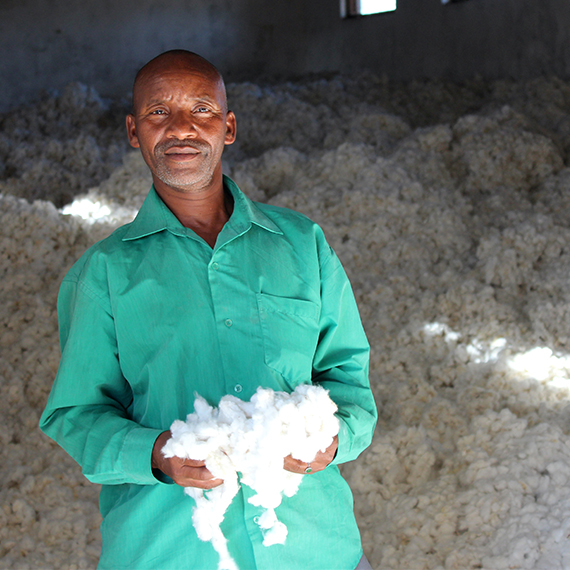
In the next stage of the process, the harvested cotton is taken to the cotton gin (from the English: ‘engine’), a textile machine in which the cotton fibres are mechanically separated from the sticky seed pods. This is done using small wire hooks that pull the cotton fibres through a sieve, leaving the seeds behind in the sieve.
The cotton fibres are then pressed into bales and can be purchased by (international) textile factories (fabric manufacturers) for further processing. Approximately 80 per cent of Tanzanian cotton is currently exported.
The cotton used to make our Kipepeo shirts is transported over a short distance of just 325 km to Arusha in northern Tanzania. Here, it is processed by Sunflag Ltd. into high-quality jersey fabrics, which are dyed according to our specifications.
Interesting fact: Incidentally, the conversion ratio of seed cotton to pure cotton fibre is 1:3, meaning that 1 kg of fibre is obtained from 3 kg of raw cotton.

Fabrics are produced and dyed
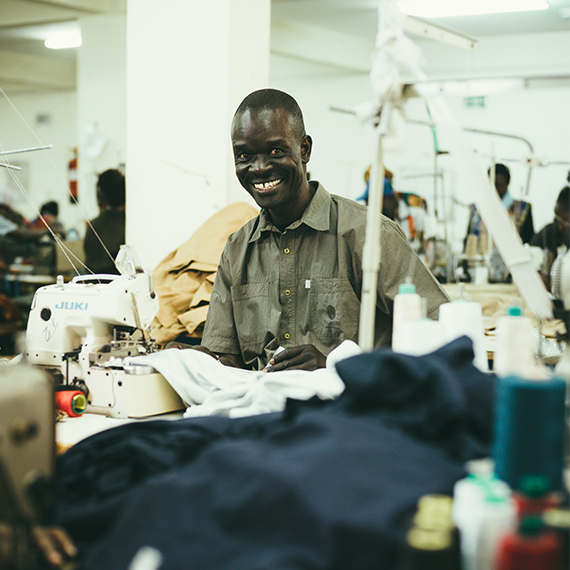
In this video, we show you how the cotton fibres are processed, spun into yarns and then knitted into fabrics on large circular knitting machines. Here, Aditya also answers the question of how the industrial wastewater from the dyeing process is treated.
Interesting facts: Incidentally, for every fabric colour we add to our range, we have to purchase 360 kg, with a minimum total quantity of 2 tonnes. From 360 kg of fabric, we can then produce around 1,700 Kipepeo T-shirts. As we have to pre-finance all our fabrics, we, as a small company, are unfortunately only rarely able to add new colours to our range.